EN
EN
 AR
AR BG
BG HR
HR CS
CS DA
DA NL
NL FI
FI FR
FR DE
DE EL
EL HI
HI IT
IT JA
JA KO
KO NO
NO PL
PL RO
RO RU
RU ES
ES SV
SV TL
TL ID
ID SR
SR VI
VI HU
HU MT
MT TH
TH TR
TR AF
AF MS
MS GA
GA BN
BN NE
NE
08/06/2026
Hoe om Las-skoene te Kies wat Beskerming teen Vonke Bied
Die Werklikheid van Drie-Honderd-Grade Vonke op die Werkswinkelvloer
Loop vandag enige swaar-metaalvervaardigingswinkel of skeepsreparasiewerkswinkel binne, en die omgewing is 'n voortdurende, intensiewe sensoriese oorbelading. Vonke spat in elke rigting, witheette slak val op die vloer, en die skerp flits van booglaswerk domineer die hele ruimte. Vir veiligheidsdirekteurs en aankoopbeamptes is dit 'n nie-ophoudende, stresvolle uitdaging om te verseker dat spanlede die presiese regte beskermende toerusting het. Na jare se oudit van industriële werfvlakke en die hersiening van werksplekbeseringregisters bly een spesifieke gevaar opvallend: diep voetbrandwonde wat veroorsaak word deur vlieënde laspat. Standaard werkskoene het eenvoudig nie die strukturele weerstand om die ekstreme toestande van 'n aktiewe lasbak te hanteer nie. Wanneer 'n los klomp smeltmetaal—wat maklik meer as dertienhonderd grade Celsius bereik—op 'n algemene sintetiese skoen land, smelt dit binne 'n sekonde deur die maaspaneel of nylonskoenveters. Die gevolg is 'n ernstige, pynlike diepweefselbrand wat 'n vaardige lassers vir weke buite werking stel en produksieskedules vertraag. Die hele span moet opgradeer na gespesialiseerde laserskoene is die enigste logiese keuse om hierdie pynlike en kostelike werkswinkelongelukke te voorkom voordat dit ooit gebeur.
Ontsluiting van roumateriaalwetenskap vir uiteindelike hittebeskerming
Wanneer betroubare laslaerskoene aangekoop word, is dit absoluut noodsaaklik om verby die oppervlakkige voorkoms te kyk en sterk te fokus op die onderliggende materiaalkunde vir langtermynveiligheid. Die primêre verdedigingslyn teen vlieënde vonke en witheette slak is altyd die gehalte van die boonste materiaal. Goedkoop gesplete leeropsies of sintetiese tekstielalternatiewe sal gou verkol, krak en voor tyd onder swaar termiese spanning faal. Waaragtige industriele beskermende voetbedekking moet staatmaak op premium, swaar volgraanleer of spesiaal behandelde beesvelle wat natuurlik intens termiese energie afstoot. Verder is die steek wat gebruik word om die skoen bymekaar te hou net so belangrik as die leer self. Standaard nylon- of katoondraad sal onmiddellik verdamp wanneer dit deur ’n los vonk raak, wat veroorsaak dat die nate van die skoen wyt oop skeur tydens ’n skof. Hoogpresterende beskermende toerusting maak gebruik van hoë-treksterkte Kevlar- of Aramiedraad wat sy volledige strukturele integriteit behou selfs onder direkte vlamblootstelling, wat verseker dat die voetbedekking jare lank duur eerder as net ’n paar kort maande.
Die Kritieke Ontwerpkenmerke wat Brandende Vraggoed Buitemuur Hou
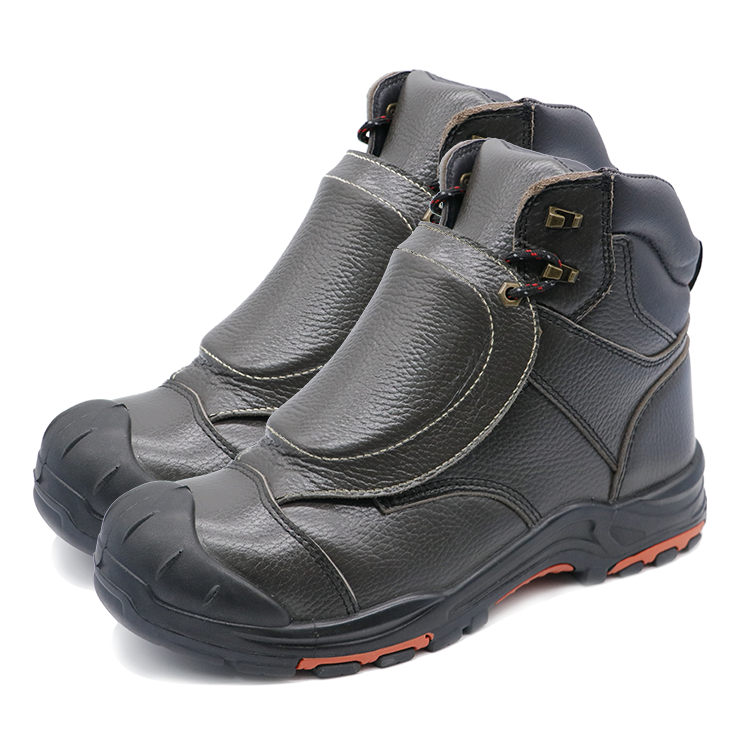
Die beskerming van 'n laser se voet vereis baie meer as net stewige leer; die algehele strukturele ontwerp van die skoen moet enige moontlike vasvangpunte waar warm rommel kan rus, uitdie weg ruim. Tradisionele veterskoeë is berug gevaarlik in 'n lasomgewing omdat die ontblote tong en die areas waar die veters oor mekaar lê, klein sakies skep waar warm slak maklik kan versamel en reg deur na die vel brand. Dit is presies hoekom ingenieursvervaardigde las-skoene 'n spesiale beskermende leerflap insluit, wat dikwels 'n metatarsale beskerming of 'n toegewyde vetterdekking genoem word, wat veilig oor die voorste gedeelte van die skoen vasgemaak word met stewige, vuurvaste klip- en -lusstelsels of robuuste vinnig-losgespens. Hierdie slim ontwerp verseker dat vonke naadloos van die skoen af gly na die vloer eerder as om deur die veters te brand. In kombinasie met hoëdigtheid, hittebestendige nitrilrubber buite sole wat kortstondige kontak met oppervlaktes wat tot driehonderd grade Celsius verhit is, kan weerstaan, bied hierdie skoeë volledige, omvattende termiese isolasie van bo tot onder.
Begrip van Internasionale Beskermingsstandaarde en Sertifikasies
Die navigasie van ingewikkelde globale veiligheidsspesifikasies is nie onderhandelbaar nie wanneer groot-skaal vlootinkoop vir internasionale industriële bedrywighede bestuur word. Inkoopafdelings moet nooit net op 'n verskaffer se woord staatmaak nie; in plaas daarvan moet hulle na gedokumenteerde, onverbeterlike bewyse van noukeurige nakoming van internasionale vernietigende toetsskakels soek. Vir werklike laslas- en swaarvervaardigingstoepassings is standaard veiligheidsskoene dikwels heeltemal ontoereikend. Inkoopspanne moet na spesifieke klassifikasies soos die Europese EN ISO-riglyne kyk, wat skoene spesifiek onderwerp aan streng toetse vir weerstand teen smeltmetaalspat en termiese geleiding. Daarbenewens verseker nakoming van Amerikaanse ASTM-raamwerke dat geïntegreerde staal- of saamgestelde tonekke swaar impak vanaf geválde staalplate of swaar masjineriekomponente kan weerstaan. Werklike industriële nakoming beteken om te verifieer dat elke enkele partyst van skoene deur erkenste derdeparty-toetsorganisasies geverifieer is om totale rust van gees vir die veiligheidsafdeling te verseker.
Die werklike besigheidswaarde van premium werksplekbeskerming
Belegging in gespesialiseerde termiese beskermende skoene lewer 'n groot opbrengs op die belegging wat regstreeks na die wins- en verliesrekening van 'n vervaardigingsmaatskappy gaan. In die swaarvervaardigings- en infrastruktuur-sektore is ervare lasers baie moeilik om te werf en baie duur om te vervang. Wanneer 'n ervare vervaardiger weens 'n voorkombare voetbrandbesering vir 'n lang tydperk mediese verlof neem, vertraag produksielyn, word leweringsdae langer en styg werknemersvergoedingsaansoeke dramaties. Deur hierdie alledaagse bedryfsrisiko's aktief te verminder deur die gebruik van gespesialiseerde laserskoene, beskerm besighede hul waardevolste menslike kapitaal terwyl dit konsekwente, voorspelbare produksieskedules handhaaf. Die verskaffing van veiligheidsuitrusting van hoë gehalte stuur ook 'n duidelike boodskap aan die werknemers dat hul fisieke welsyn gewaardeer word, wat direk daartoe bydra om die moraal op die werf daagliks te verhoog, vertroue op die werksplek te bou en werknemervlukgrate te verminder in 'n hoogs mededingende werksmark.
Die Vervaardigingsuitmuntendheid en Kwaliteitsversekering agter MaxiTough
Die vervaardiging van skoene wat die brutale vereistes van swaar vervaardiging kan weerstaan, vereis 'n foutlose vervaardigingsinfrastruktuur en 'n onverwaterbare benadering tot gehaltebeheer. MaxiTough het meer as 'n dekade gewy aan die perfeksie van die produksie van hoë-prestasie industriële veiligheidsskoene, met 'n reuse tien-duisend vierkantmeter groot vervaardigingsentrum wat heeltemal gefokus is op beskermende uitmuntendheid. Elke enkele partjie veiligheidsskoene wat deur MaxiTough ontwerp word, ondergaan 'n streng drievlakkige gehaltekontrolestelsel om te verseker dat grondstowwe, stewels en binding aan streng CE-, ANSI- en ISO-standaarde voldoen. Deur die gebruik van hoë gehalte hittebestendige leer, egte Kevlar-draadstelsels en gespesialiseerde vulkaniseerde buitensole, verskaf MaxiTough wêreldwye verspreiders en grootskaalse industriële kopers 'n robuuste, betroubare voorsieningskettingoplossing. Deur saam te werk met 'n toegewyde vervaardiger soos MaxiTough, verseker u dat u werknemers geseënde, onverwaterbare beskerming ontvang wat u span beskerm en u besigheid se winsgewendheid verseker.